ServicesWhole-Home Filtration
Whole-Home Filtration in Litchfield Park, Fitted to the Pipes You Have
We put a carbon filtration system on the main line where water enters your home, so the chlorine taste and smell are gone from the kitchen faucet, the shower and the washer alike. First we test your water and check the plumbing earlier owners and plumbers left behind.
How Whole-Home Filtration Works and Who It Suits
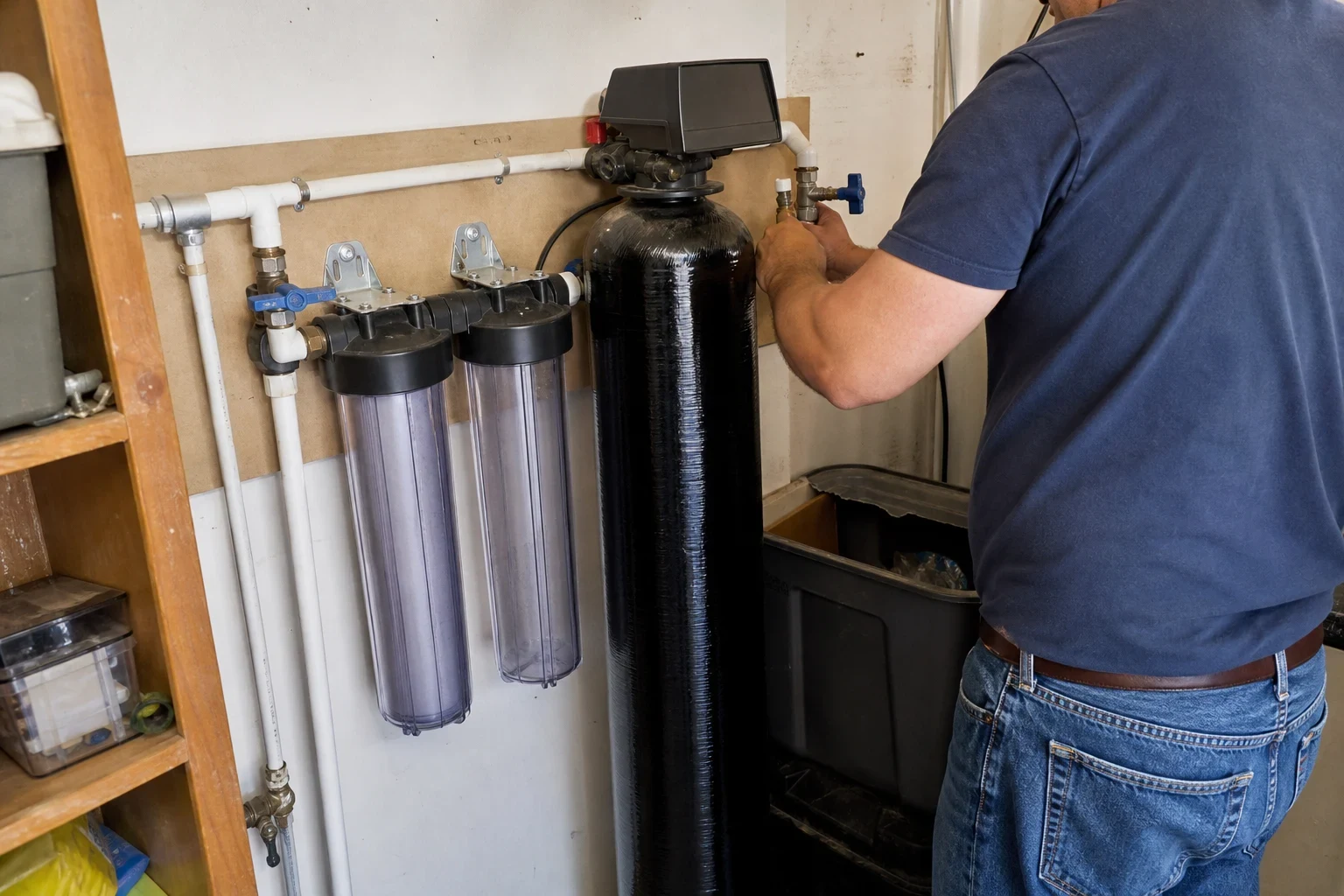
This is a point-of-entry setup: it goes on the main line just past the shutoff valve, most often as a sediment prefilter feeding a large carbon tank. The prefilter stops grit before it reaches the media, and the carbon holds on to chlorine and the compounds behind most taste and smell complaints. When a utility treats with chloramine, we call for catalytic carbon, since ordinary carbon is slow to remove it.
It makes sense when the complaint follows you through the house: bleach odor in the shower, skin that feels dry after a bath, a strange taste even in the ice. Softening is not part of what it does. If your test points to hardness as the cause of spotted glasses and crusted aerators, one of our water softeners handles that, and some households are best served by both. When you want drinking water cleaned to a finer level, reverse osmosis at the kitchen sink does that job better.
Older houses bring extra questions. Mains have been rerouted, copper has been spliced into galvanized runs, and shutoffs have sat unturned for decades. We check all of it before anything else, since a filter can only be as dependable as the joints holding it in place.
What the Installation Includes
- 01
Sediment prefilter
A cartridge housing ahead of the carbon traps sand, scale flakes and rust. In homes with remaining galvanized pipe, this protects the carbon bed from clogging early.
- 02
Carbon vessel matched to demand
Your bathroom count, fixture count and the diameter of your main decide how large the carbon vessel needs to be. Put too small a vessel on an older 3/4-inch line and showers often go weak the moment the washer starts.
- 03
Bypass valve
A three-valve loop or a built-in bypass routes water past the tank when a cartridge or the media needs changing. The rest of your home keeps running water the whole time.
- 04
Dielectric connections where needed
When new copper or brass meets old galvanized steel, we use dielectric fittings. Joining the two metals directly speeds corrosion at the joint.
- 05
Flush, check and cleanup
We backflush fresh carbon to clear fines, check every joint under pressure, and take the old pipe and packaging with us. Install included with water treatment systems, so the labor is part of the system you choose.
Questions about Whole-Home Filtration?
Call(480) 571-4634Signs Your Home Could Use Whole-House Filtration
Chlorine smell when you shower
Chlorine gasses off fastest from hot water, and a closed shower stall holds it in. A filter at the kitchen sink never touches that water.
Off taste at every tap
If the bathroom sink, the fridge dispenser and the kitchen faucet all taste the same, the issue is on the supply side, not in one fixture.
Grit in aerators and screens
Flakes in faucet aerators or the washer inlet screen often come from aging galvanized pipe or disturbed sediment. A prefilter catches it before it reaches fixtures.
Dry skin and dull hair after bathing
Many people notice a difference once chlorine is out of their shower water. A water test tells us whether chlorine or hardness is the more likely cause.
A patchwork of past repairs
Mixed copper, PEX and galvanized steel at the main or the water heater is a reason to filter at the entry point and to have someone check those joints while the water is off.
How the Job Runs, From Test to Tap
- 1
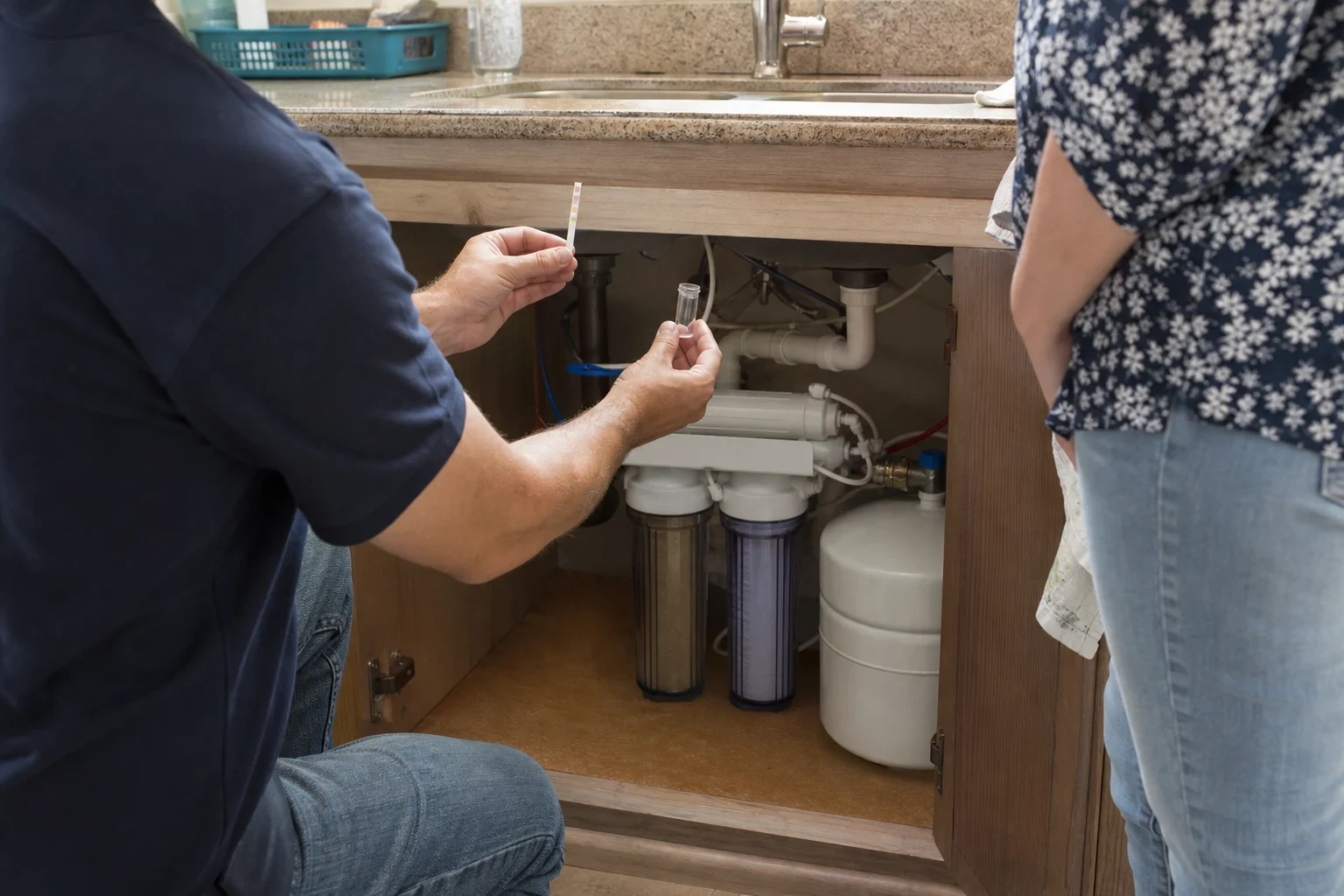
Free water test
We start with a free water test with zero obligation. We check chlorine, hardness, iron and total dissolved solids so the system matches your water, not a brochure.
- 2
Plumbing walk-through
We find where your main enters, check the shutoff valve, measure line size and note any galvanized sections or old repairs. If the valve is seized, we tell you before install day.
- 3
Your quote by phone
You get installed system pricing that names the tank, media, prefilter and any fittings or valve work, so nothing is added later.
- 4
Install day
Water is off for a few hours. We cut in the bypass and system, make the connections, then flush the carbon and pressure-test every joint.
- 5
Walk-through and handoff
We show you the bypass, explain when the prefilter cartridge needs changing and how long the carbon typically lasts for your usage.
Where the Cost Comes From
Two things drive the number: how large a system your household needs and the shape the plumbing at your main line is in. An open, reachable entry point with a working shutoff keeps labor down. Older plumbing can call for extra fittings or a new valve, and those go into the quote up front instead of turning up halfway through the job.
- Tank size and flow rate
- More bathrooms and higher demand need a larger carbon bed to hold pressure and give the water enough contact time.
- Media type
- Catalytic carbon for chloramine costs more than standard carbon. Your test results decide which one you need.
- Main line location and access
- A main that enters in a garage with open wall space is straightforward. When the main sits in a cramped utility closet or has to be moved to make room, expect more labor and more pipe.
- Condition of existing plumbing
- A seized gate valve, corroded galvanized nipple or an old pressure regulator may need replacing to make a sound connection.
Whole-Home Filtration Questions
Will a whole-house filter lower my water pressure?
A system sized to your line and fixtures should feel no different at the shower. When people do lose pressure, the cause is almost always a tank too small for the demand or a prefilter cartridge left in too long. We measure pressure before and after the install so you can see the numbers.
Does this soften my water too?
No. Carbon removes chlorine and taste and odor compounds, but it does not remove the calcium and magnesium that cause scale. If your test shows hardness is the bigger problem, we will tell you and explain how water softeners compare.
Will it fix rusty water from old pipes?
The prefilter catches rust flakes before they reach your fixtures, but it cannot repair corroding pipe inside your walls. If we see heavy galvanized corrosion during the walk-through, we will point it out so you can weigh a repipe separately.
How often does the system need service?
Sediment cartridges are typically changed every few months, depending on how much your water carries. The carbon lasts much longer and is replaced on a schedule based on your household's usage. We explain both at handoff.
Should I add a separate filter for the water we drink?
Plenty of households find the carbon system alone gets tap water tasting the way they want. If your goal is less lead from old fixtures or fewer dissolved solids in what you drink and cook with, reverse osmosis under the kitchen sink is the usual companion. Your test results help show whether it is worth adding.
Find Out What Your Water Needs First
We will test your water at no charge and look over the plumbing where a system would go. You get a straight answer on whether whole-home filtration fits your home.