ServicesWater Testing
Water Testing in Litchfield Park, Read at Your Own Tap
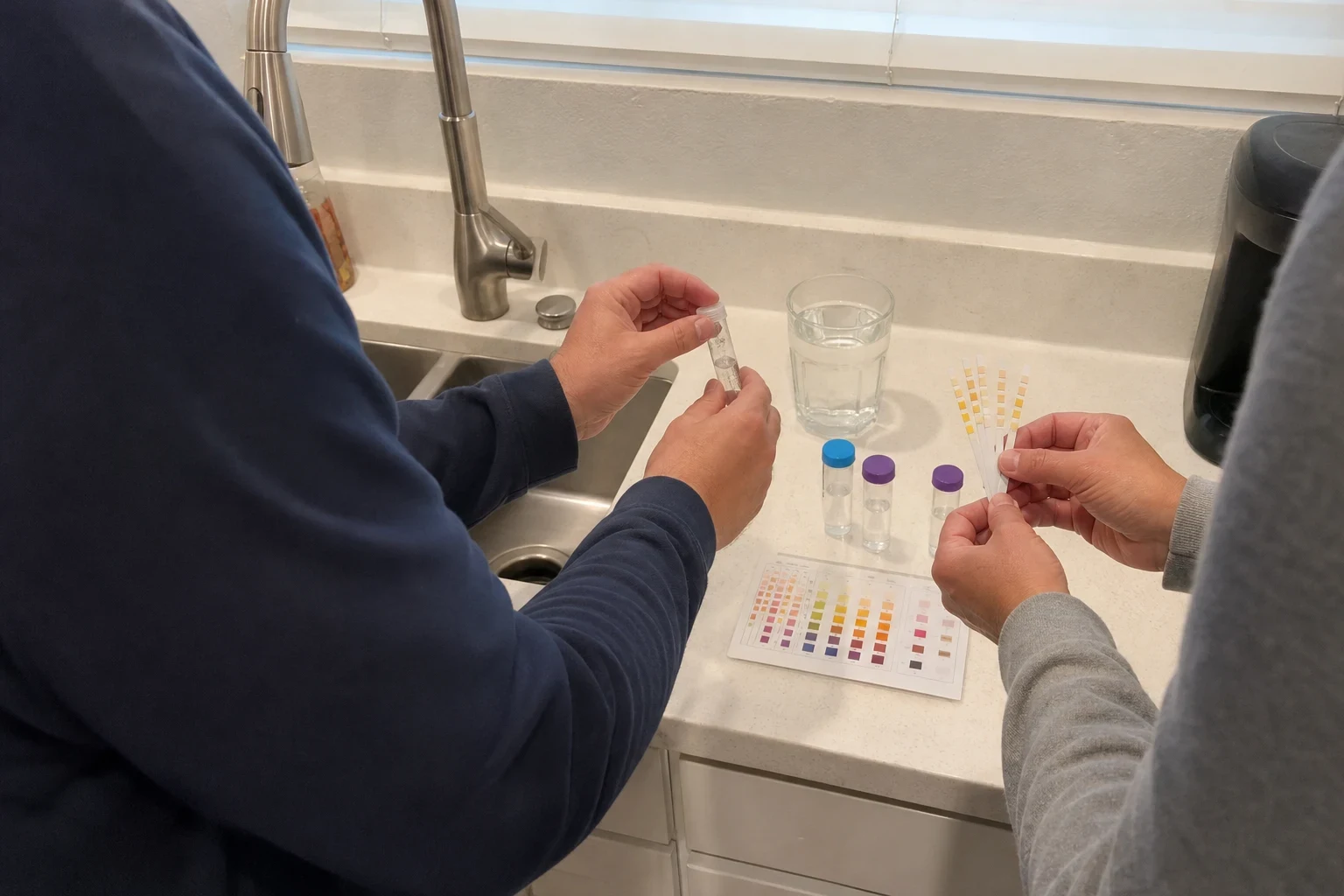
We test the water coming out of your faucets, not a citywide average. That means hardness, chlorine, dissolved solids and pH, plus a look at the pipes and fittings it runs through. You see every reading, and you leave knowing what your water needs.
What a Home Water Test Tells You
A utility report describes water as it leaves the treatment plant. Your tap gets that water after it has passed through your service line, your main shutoff, your water heater and every repair a past owner made. In an older house, that last stretch can change what comes out of the faucet. A corroding galvanized nipple can add rust. A softener that stopped regenerating years ago can let hard water straight through.
So we test at the point of use and read the plumbing at the same visit. The test is free with zero obligation. If the numbers say your water is fine, we tell you that. If they point to scale, chlorine taste or something in the pipes, you get a plain explanation of the cause and which system, if any, would address it.
What We Check During the Visit
- Hardness reading
- Dissolved calcium and magnesium are the minerals behind the chalky ring on showerheads and the scale layer that settles in the bottom of a water heater tank. West Valley water usually tests on the hard side, but the exact grains-per-gallon figure decides whether a softener is worth it and how much resin it would need.
- Chlorine level
- Chlorine is added on purpose to keep municipal water safe in the mains. It is also behind most complaints about pool-like smell and taste. We measure it so a carbon filter can be sized to remove it.
- Total dissolved solids and pH
- A TDS reading shows the overall mineral load, which matters if you are considering reverse osmosis for drinking water. The pH number shows whether your water leans acidic. Acidic water slowly wears away the inside of copper lines and older brass or galvanized fittings, so it changes what we look for in the pipes.
- Iron and visible sediment
- We draw a first sample that has sat in the pipes overnight and a second after flushing. If the first draw shows iron or color and the flushed one does not, the source is usually your own plumbing, not the supply.
- A walk through the plumbing
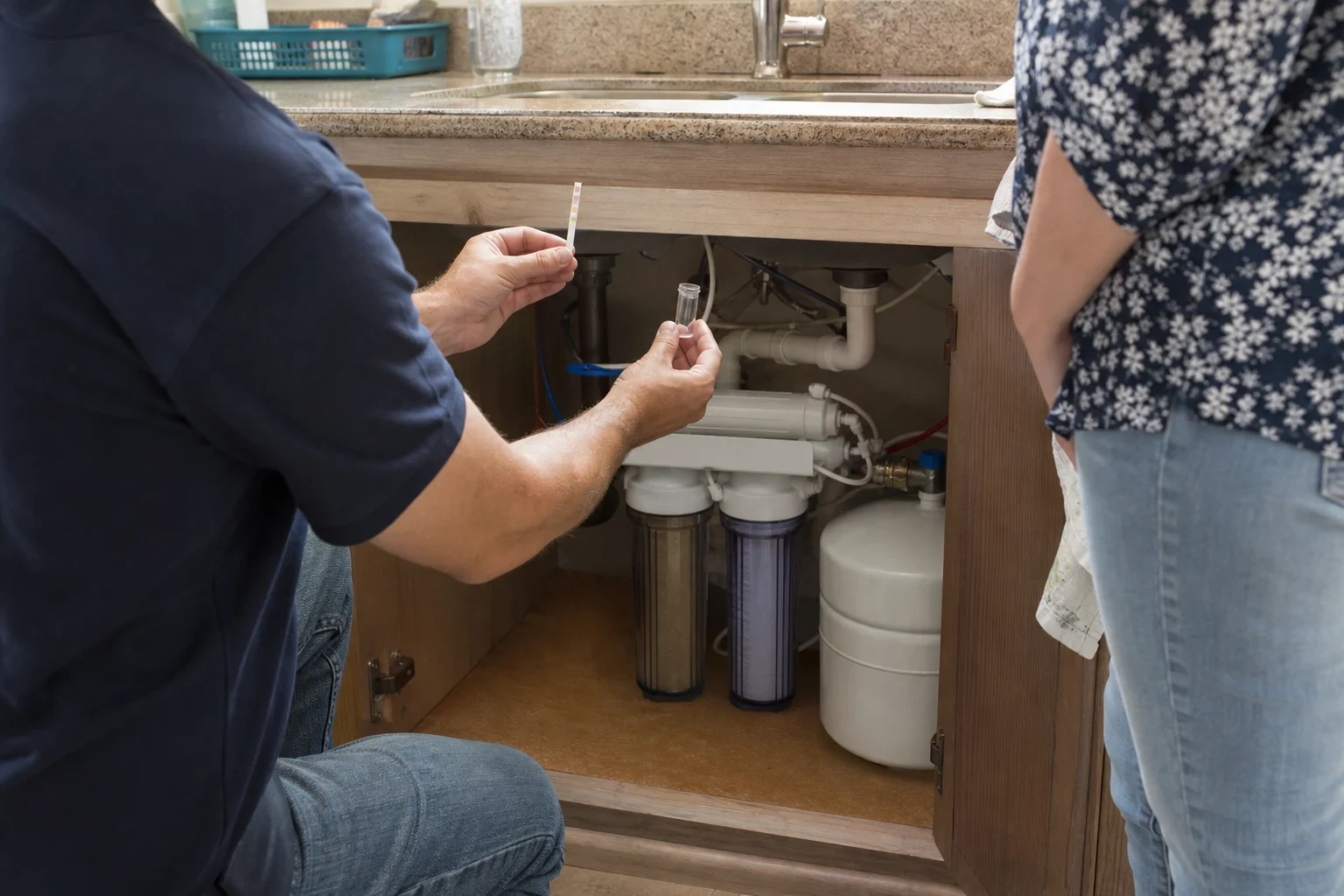
- We note pipe material, the age and type of your main shutoff, the water heater, any existing softener or filter and the spot where new equipment would tie in. Patched sections and mixed metals get flagged, since they affect both water quality and installation.
Signs Your Water Is Worth Testing
White crust on fixtures
Scale on aerators, shower glass and dishwasher racks is calcium carbonate dropping out of hard water. Heat speeds it up, so it builds fastest in your water heater.
A softener that may not be working
Many older homes came with a softener nobody has serviced since. If the brine tank salt never goes down or scale has returned, a hardness reading after the unit tells us whether it is still doing anything.
Rusty or metallic first draw
Brown tint or a metallic taste in the morning that clears after a minute points to corroding galvanized pipe or fittings inside the house.
A house built before 1986
Copper lines from that era were often joined with lead-based solder. Our on-site readings do not measure lead, so we explain how a laboratory test works and when it is worth ordering one.
Chlorine smell or taste
If you buy bottled water because the tap tastes like a pool, the chlorine reading tells us whether a carbon filter or an under-sink unit is the better fix.
Mixed pipe after past repairs
Copper spliced directly to galvanized steel without a dielectric fitting corrodes at the joint. We often find these behind water heaters and under sinks.
What Moves the Price After the Test
The water test itself is free. What it changes is the price of any system you choose afterward, because the readings and the plumbing set the size and the install work. Install is included with our water treatment systems, so the number you hear by phone covers the equipment and putting it in.
How hard the water is
Higher hardness needs more resin capacity so the softener is not regenerating constantly and wasting salt and water.
Household size and fixtures
More bathrooms and people mean higher peak flow, which calls for a larger valve and media tank to avoid a pressure drop.
Condition at the tie-in point
An old gate valve that will not close fully, galvanized pipe needing transition fittings or no existing loop all add work at installation.
Which system the results point to
Whole-home filtration, a water softener and under-sink reverse osmosis solve different problems and differ in parts and labor. Some homes need one; some benefit from pairing two.
How the Test Visit Runs
- 1
Booking by phone
On the call, describe what has caught your attention and give us a rough build year for the house. We pick a time together. If possible, leave the kitchen faucet off overnight so the first sample reflects water that sat in your pipes.
- 2
Samples from the right taps
We sample the kitchen cold tap first-draw, then flushed. If you have an existing softener or filter, we also sample before and after it to see whether it is still working.
- 3
Readings you watch
Hardness, chlorine, TDS, pH and iron are read at your sink while you look on. Nothing is sent away and reported back days later for these basic numbers.
- 4
Plumbing check and plain results
We look at the pipe material, shutoff, water heater and install location, then go through each number and what causes it. If equipment would help, we explain which type and why, and give you installed system pricing to take your time over.
Water Testing Questions
Is the water test really free?
Yes. It is a free water test with zero obligation. We take the readings, explain them and give you pricing if equipment makes sense. Whether you buy anything is your decision.
Will you just tell me I need a softener?
No. The test decides that. If your hardness is low enough or your existing unit is working, we say so. If chlorine taste is the real complaint, a carbon filter may be the better fit.
Can your test detect lead?
Our in-home readings cover hardness, chlorine, TDS, pH and iron. Lead at the levels that matter needs a laboratory analysis of a carefully collected sample. If your home has older copper with lead solder or brass fixtures, we explain how to arrange one and what the results would mean for your options.
How long does the visit take, and do I need to prepare?
Most visits take under an hour. It helps to leave the kitchen cold tap unused overnight for a first-draw sample and to clear access to your water heater and main shutoff.
I already have a softener. Is testing still useful?
Often more so. Sampling before and after the unit shows whether the resin still removes hardness. Old units commonly have a failed control valve or exhausted resin while the owner assumes they still work.
Find Out What Is in Your Water
One visit gives you real numbers from your own tap and a look at the pipes behind them. Then you can decide on a system, or on nothing at all, with the facts in hand.