ServicesReverse Osmosis
Reverse Osmosis in Litchfield Park, Fitted Under Older Sinks
We install under-sink reverse osmosis systems that strip dissolved minerals, chlorine taste and trace metals from the water you drink and cook with. Before we plan anything, we check the shutoff valve, drain line and cabinet space under your sink, because older kitchens rarely match the diagram in the box.
What Reverse Osmosis Does and When It Fits
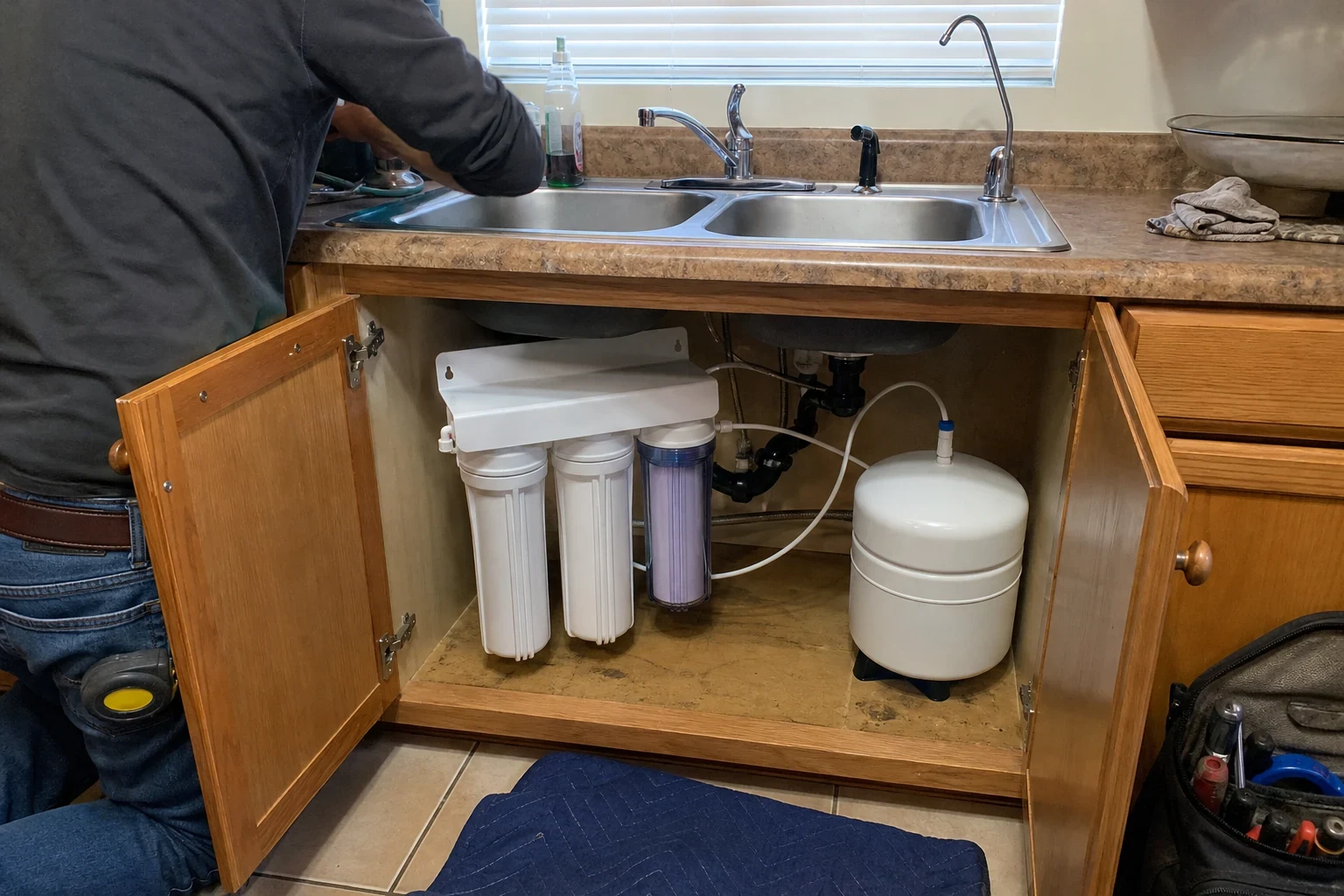
Reverse osmosis pushes tap water through a semipermeable membrane fine enough to hold back most dissolved solids, including calcium, sodium, nitrates and lead picked up from old pipes or solder. A sediment prefilter and a carbon block go first to protect that membrane from grit and chlorine, and a carbon polishing filter cleans up taste on the way to a dedicated faucet. You get one tap of clean, low-mineral water at the kitchen sink. It does not treat the rest of your home.
It is the right call when the problem is what you drink: cloudy ice, a mineral or chlorine taste, a test showing lead at the tap, or a pantry full of bottled water. Water across the West Valley carries a heavy load of dissolved minerals, which is exactly what a membrane is built to remove. If your concern is scale on fixtures or chlorine in the shower, whole-home filtration or a water softener is the better tool, and we will say so plainly.
What Your Reverse Osmosis Install Includes
- 01
A staged filter system and tank
Sediment prefilter, carbon block, RO membrane and a carbon polishing filter, with a pressurized storage tank so a full glass comes out at normal speed. Some people find membrane water tastes flat. For them, an optional mineral stage downstream of the membrane restores a trace of calcium and magnesium for a rounder taste.
- 02
A dedicated drinking water faucet
We use an existing sprayer or soap dispenser hole when there is one, or drill the sink deck or countertop. Older porcelain-coated cast iron sinks need a slower, careful bore so the coating does not chip.
- 03
A proper feed valve
We tie into the cold supply with a tee at the angle stop, never a needle-style saddle valve. If the existing stop is a decades-old compression valve that weeps or will not close fully, we replace it before connecting anything.
- 04
Drain line connection
The reject water runs to a drain saddle mounted above the P-trap. We look at the tailpiece first, since old chrome-plated brass or thin metal drains can crack when drilled and are better replaced than patched.
- 05
Refrigerator or ice maker line, if you want it
A tee off the RO output can feed your fridge so ice comes out clear. We route the tubing so it is protected from being kinked behind the appliance.
- 06
Startup and readings
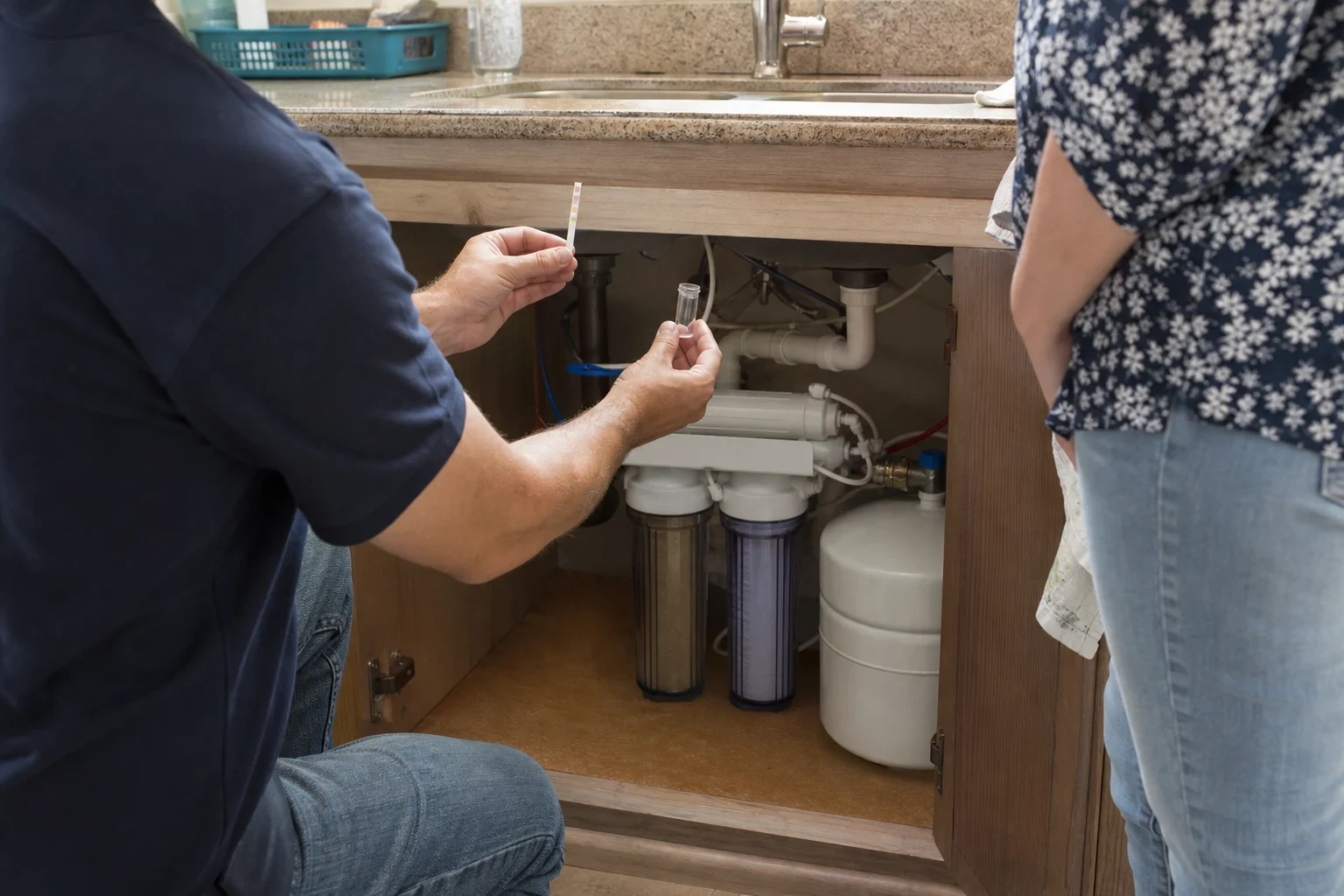
We flush the new filters and tank, then measure total dissolved solids at your regular tap and at the RO faucet so you can see the difference in numbers.
Questions about Reverse Osmosis?
Call(480) 571-4634Signs an Under-Sink RO System Makes Sense
Cloudy ice and white flakes
Minerals concentrate as water freezes, so hard, high-solids water leaves cloudy cubes and flakes in the glass. A kettle lined with white scale points to the same cause.
Your water tastes like a pool or a rock
Chlorine and dissolved salts both show up in coffee, tea and plain water. The carbon stages handle chlorine and the membrane handles the minerals.
Plumbing from before 1986
Lead solder was common in copper joints until the federal ban, and some older faucets used leaded brass. If a test finds lead at the tap, an RO system is a direct fix for drinking water while you plan any repiping.
You are hauling cases of bottled water
If you already refuse to drink from the tap, a membrane system gives you similar water without the jugs or the recycling.
An old RO unit that runs constantly
Hearing water trickle to the drain all day usually means a failed auto shut-off valve or check valve. When the faucet fills a glass slowly, the usual culprits are a membrane clogged with scale or a storage tank whose internal bladder has gone flat, and some units are too worn to justify new parts.
How Your RO Installation Goes
- 1
Free water test and a look under the sink
We test hardness and total dissolved solids, then check your shutoff valve, drain, water pressure and the cabinet space around any garbage disposal. The free water test comes with zero obligation.
- 2
A plan and pricing by phone
We explain which system fits, whether a booster pump or new valve is needed and why, and give you the installed price before any work is booked.
- 3
Install day
We lay a mat in the cabinet, shut off the water, replace a worn angle stop if the plan calls for it, then mount the filter bracket and tank, set the faucet and connect the supply and drain lines with push-fit or compression fittings.
- 4
Pressure, flush and check
With the water back on, we look over every fitting for drips, flush the carbon and the first tank of water, and take TDS readings with you. We clear out tubing scraps and drill shavings before we go.
- 5
Filter schedule explained
You get the part numbers for each cartridge and a plain schedule for when each one is due, so the system keeps performing.
What Changes the Price of a Reverse Osmosis System
Your price comes from the system you pick and the condition of things under your sink. Install is included with our water treatment systems, so the figure we quote covers both the equipment and putting it in. Most of the difference comes from your current plumbing and the extras you choose.
- Stages and add-ons
- A basic four-stage unit runs less than one with a remineralization stage, UV or a permeate pump that reduces wasted water.
- Inlet pressure
- A membrane performs best at about 40 to 60 psi coming in. Lower than that, it makes less water and sends more to the drain, so a booster pump may be called for.
- Sink and countertop type
- An open hole is the easiest option. Boring through quartz, granite or enameled cast iron needs special bits and extra time.
- Shape of the valves and drain
- A stuck angle stop or rusted drain tailpiece is swapped out so the new system does not depend on an old weak spot.
- Distance to the fridge
- Running tubing across the kitchen to the refrigerator takes more material and more time to route.
Common Questions About RO at the Kitchen Sink
Is it true reverse osmosis wastes a lot of water?
A conventional unit rejects several gallons for every gallon it makes, and that ratio climbs when inlet pressure is low or the water is mineral-heavy. Once the storage tank fills, the auto shut-off valve closes and the reject flow stops. Adding a permeate pump or booster pump can reduce the waste a good deal, and your pressure reading tells us whether either one is worth it.
Does reverse osmosis remove healthy minerals?
Yes, the membrane removes calcium and magnesium along with everything else it rejects. Most of those minerals come from food rather than water. If the taste seems too flat, an optional mineral cartridge after the membrane restores some calcium and magnesium.
How often do the filters need changing?
The sediment and carbon prefilters typically last 6 to 12 months. A membrane holds up longer, often two or three years, though heavy daily use and mineral-rich water wear it out sooner. We set your replacement schedule from your own test results rather than a generic chart.
Will it fit under a sink that already has a garbage disposal?
Usually, yes. The filter bracket mounts on a side wall and the tank can stand upright or lie on its side, and we measure the space during the water test. In a very tight cabinet we may suggest a slimmer tank or a compact unit.
If I get whole-home filtration, do I still need RO?
Not always. Whole-home carbon filtration takes care of chlorine taste and odor at every tap, but it does not remove dissolved minerals or most lead. Many homes pair the two, with RO at the kitchen sink for drinking and cooking.
Find Out What Your Tap Water Holds
We will test your water, look at the valves and drain under your sink, and tell you whether an RO system is worth it for your home.