ServicesWater Softeners
Water Softeners in Litchfield Park, Plumbed Into Older Lines
Hard water leaves white crust on fixtures, scale in your water heater and film on glass. We measure your hardness first, size a softener to your household's actual use, and fit it to the plumbing you already have, including old valves and past repairs.
How a Softener Takes the Hardness Out
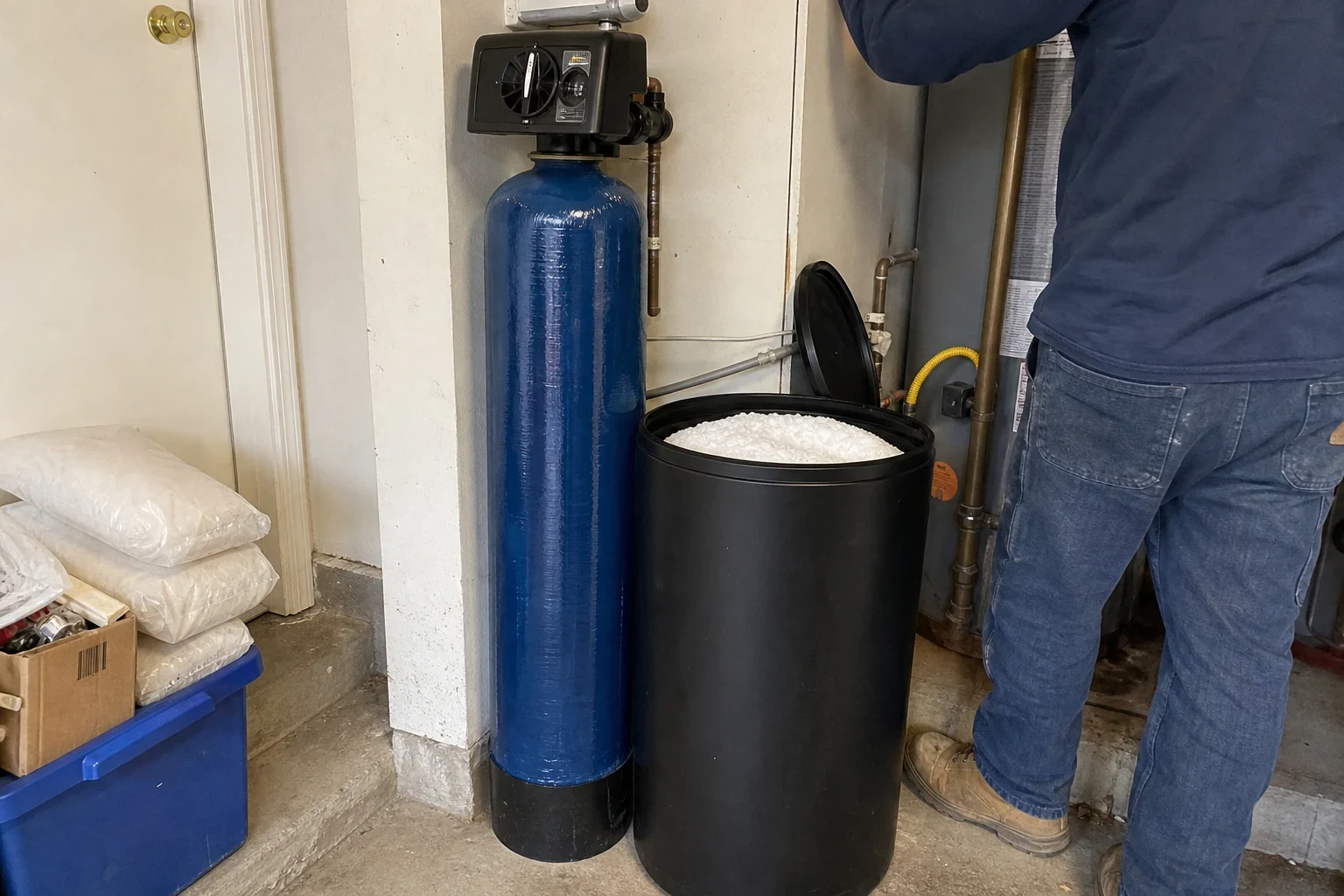
Water entering the softener passes through a tank filled with resin beads that carry sodium or potassium ions. Calcium and magnesium, which cause scale, stick to the beads and knock those ions loose into the water. When the beads are full of hardness, the control valve runs a regeneration: brine from the salt tank rinses the resin, pulls the minerals off and flushes them to the drain.
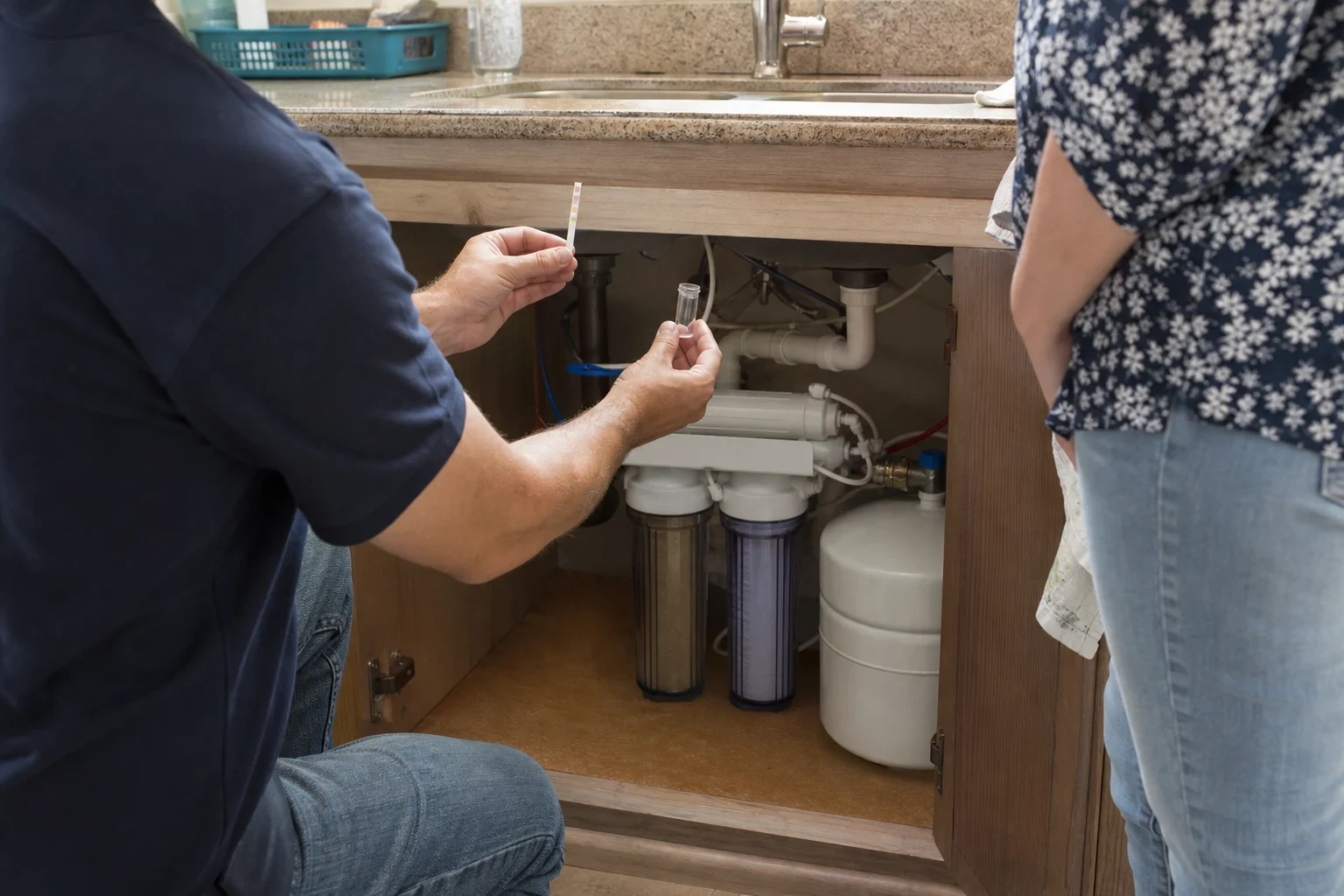
West Valley water is often hard, but your softener should be chosen from your own test result, not your zip code. We read hardness in grains per gallon at your faucet and size the resin bed so the unit regenerates every several days rather than nightly, which cuts salt and water use.
In an older house there is one more question: will the plumbing accept a softener cleanly? Plenty have no loop, a corroded shutoff or an old unit left behind in the garage. We check for all of that before quoting, so the price you get by phone already includes it.
What Your Softener Install Includes
- Hardness and iron measurement
- We test hardness and check for iron before choosing equipment. Iron fouls standard resin over time, so its presence changes the media and settings we recommend.
- Resin tank sized in grains
- We calculate daily grain load from your hardness and household size, then pick a tank capacity that gives a sensible regeneration interval.
- Metered control valve
- A demand-initiated valve counts the gallons you use and regenerates only when the resin is near capacity. Older timer-only valves regenerate on a schedule whether you used water or not.
- Bypass loop and isolation valves
- We fit a bypass on each softener, which lets you take the unit offline for service while the rest of your home keeps running water. A main shutoff that is seized or weeping gets pointed out to you before any pipe is cut.
- Drain line with an air gap
- The regeneration discharge runs to a drain with a proper air gap, so wastewater can never siphon back into the softener.
- Startup and handoff
- Before we leave, we fill the brine tank, enter your hardness and capacity into the valve, and trigger a regeneration to confirm it cycles correctly. You'll know where the bypass handle is and how to tell when the salt is running low. Installation is included with the water treatment systems we sell.
How Hard Water Shows Up Around the House
Chalky buildup on fixtures
When water dries, it leaves calcium carbonate behind as a pale ring. Aerators and the small holes in showerheads collect it first.
A water heater that pops and rumbles
Heating water makes calcium carbonate settle into a hard layer on the bottom of the tank. Water caught under that layer flashes to steam and makes the noise you hear, and the layer itself blocks heat from the burner or element, so the heater burns more energy.
Soap that barely suds
Calcium and magnesium bind with soap and turn it into sticky scum instead of lather. You end up using more shampoo and detergent, and a dull film stays on your skin and the shower doors.
Spotted glasses and scratchy towels
Minerals dry onto dishes and lodge in fabric, so towels come out stiff even after a complete wash.
An aging softener that never stops cycling
A tired unit can regenerate every night, go through salt quickly or pass hard water because the resin is spent or the injector is plugged. We look at whether a repair or a new control valve is a better choice than replacing the whole system.
What Moves the Price of a Softener
The equipment is only part of the number. The rest depends on how easily your plumbing accepts the unit and what we find at the connection point. We price all of it before we start.
Grain load from your test
Grains per gallon multiplied by the gallons your home uses each day sets how much hardness the resin has to capture. A heavier daily load calls for a larger resin tank and a bigger brine tank.
Existing softener loop
A pre-plumbed loop in the garage keeps labor short. Without one, we have to tap into the main line, which takes more pipe, fittings and time.
Condition of older pipe
Corroded galvanized pipe, a failing main shutoff or brittle connections from past repairs may need replacing at the tie-in so the new joints hold.
Removing an old unit
Hauling away an abandoned softener, salt tank and old brine line adds a little labor, and sometimes the old drain connection needs rework to meet current practice.
Drain and power access
If the nearest drain or outlet is far from the install spot, we add drain line or plan a different location.
How Install Day Runs
- 1
Test and plan
We measure hardness at your tap, look at where the main line enters, and check for a softener loop, a nearby drain and an outlet. You get installed system pricing by phone, with any plumbing changes named.
- 2
Prepare the connection
We shut off the main, drain the line and cut in at the loop or the main. On older homes, we transition from galvanized or aged copper with the right fittings so dissimilar metals don't corrode at the joint.
- 3
Set and plumb the unit
The resin tank and brine tank go on a level spot. We connect the bypass, the inlet and outlet, and the drain line with its air gap.
- 4
Program and test
We program your hardness and capacity, run a regeneration, then retest softened water at a faucet to confirm the reading drops. We check every joint for drips and clean up the work area.
Softener Questions We Hear Often
Does softened water taste like salt?
At normal hardness levels the softener adds very little sodium, and few people can taste it. Potassium chloride can go in the same brine tank if you prefer to skip sodium, and an under-sink reverse osmosis unit removes most of it from drinking and cooking water.
Can a softener get rid of a chlorine taste or smell?
No. Ion exchange targets calcium and magnesium and lets chlorine pass. Carbon media removes chlorine, and that is what our whole-home filtration uses. Putting a carbon tank before the softener also protects the resin, since chlorine breaks the beads down over time.
Will you hook up to the softener loop in my garage?
In most cases. We check the loop for corrosion, make sure it really ties into the main and test that the shutoffs still close. If it was capped poorly or mixes metals, you hear what has to be replaced before we price the job.
How much salt will I go through?
That comes down to your hardness, how much water you use and the size of the tank. A correctly sized metered unit regenerates only when needed, so it uses much less salt than an older timer valve. We show you how to check the brine tank and spot a salt bridge.
Do I need a test if my neighbor already has a softener?
Yes, we suggest it. Sizing depends on your hardness, any iron and how your household uses water, and a unit that is too big or too small either wastes salt or lets hard water slip through. The test is free with zero obligation.
Find Out How Hard Your Water Really Is
We'll measure your hardness, look at your plumbing and tell you plainly whether a softener is worth it. The test is free and there's no obligation.